



Health systems and community-based nonprofits across the country are navigating confusion, fear, and uncertainty in the wake of recent unprecedented, chaotic, and deeply harmful executive branch actions and orders. Some leaders feel like the only appropriate response is to comply in advance, scrub language, and try to stay the course while hoping to avoid attacks from reactionary officials or litigation. Others are curtailing health equity efforts, reconsidering social needs investments, or are shoring up policies and protections in support of their most vulnerable patients. Most are having a hard time keeping track of the policy threats, while few have the resources for comprehensive organizational risk assessments or action plans.
Watch to understand the facts about current policy threats to health equity and social needs, get tools to assess risks to your organization and your mission, and identify a menu of actions to help respond to this moment.
This political moment is illustrating what we’ve always known: health inequities and unmet social needs are experienced as harm. In this webinar, expert panelists explain how to respond and protect your employees, patients, and communities from policies and actions that are putting people in harm’s way.
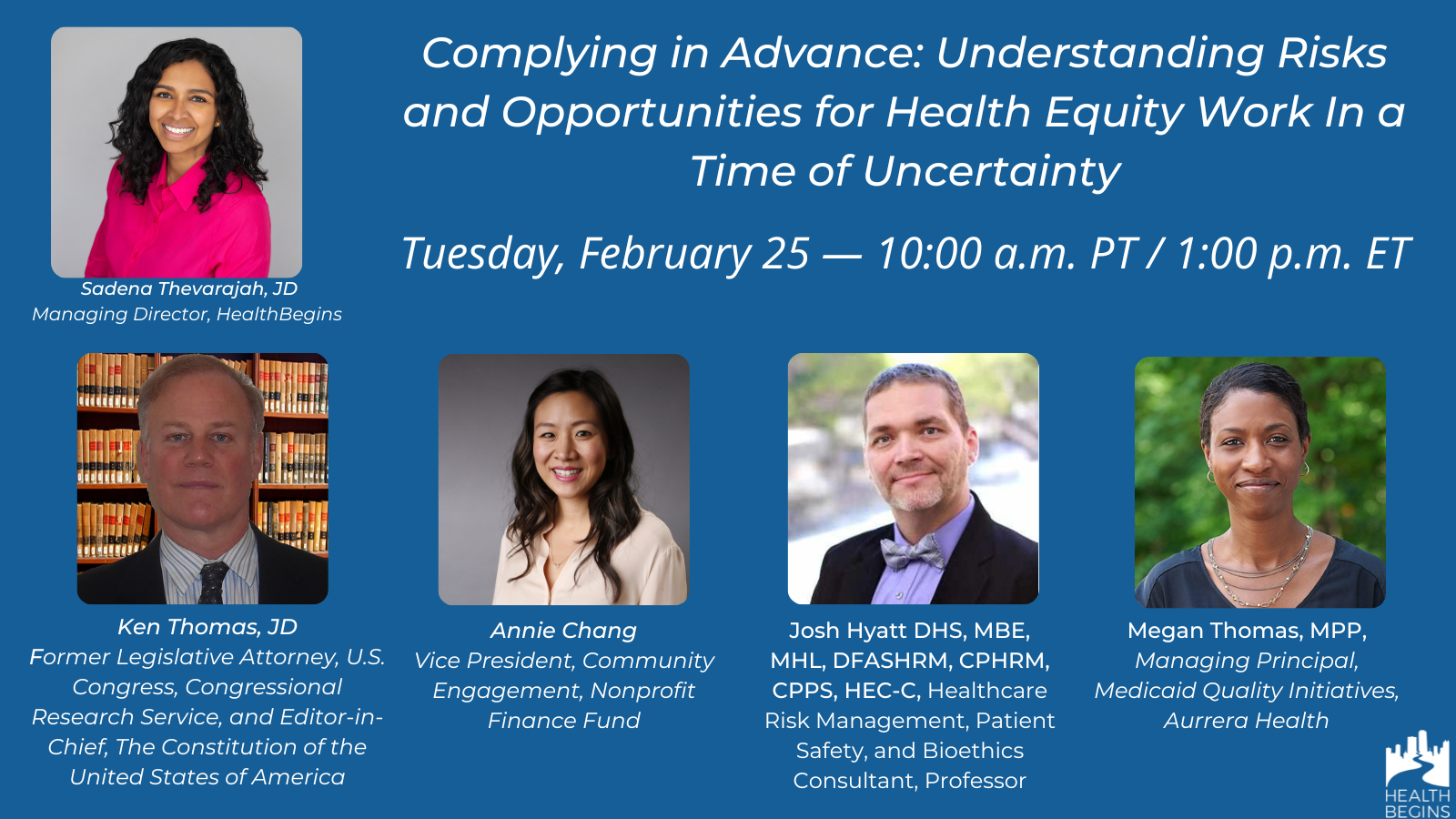
Speakers:
- Sadena Thevarajah, JD, Managing Director, HealthBegins
- Annie Chang, Vice President, Community Engagement, Nonprofit Finance Fund
- Ken Thomas, JD, Former Legislative Attorney, U.S. Congress, Congressional Research Service, and Editor-in-Chief, The Constitution of the United States of America: Analysis and Interpretation
- Megan Thomas, MPP, Managing Principal, Medicaid Quality Initiatives, Aurrera Health
- Josh Hyatt, DHS, MBE, MHL, DFASHRM, CPHRM, CPPS, HEC-C, Healthcare Risk Management, Patient Safety, and Bioethics Consultant, Professor
Webinar Objectives:
By the end of the webinar, attendees will be able to:
-
Understand the present policy changes and their implications for health care and health equity, including clarity on which actions are obligatory or not.
-
Assess the risks for your institution of resisting these directives, as well as the alternative risks of curtailing health equity efforts.
-
Identify a menu of potential actions for institutions to stay committed to health equity.
Featured Content

How to Read the New Federal Dietary Guidelines as a Health Equity Advocate
The new Dietary Guidelines released by the Department of Health and Human Services not only run counter to established health standards, but also against health equity goals. Here are the the issues with these guidelines and what actions health equity advocates can take for better outcomes.

Small Practices Improve Health and Health Equity in Big Ways
The EQuIP-LA effort led to statistically significant health improvements and highlighted lessons that could help amplify the impact of small practices in advancing equity in more places.

Building Community to Improve Maternal Health: Lessons from Group Prenatal Care
HealthBegins supported health centers across the country to find new ways to make maternal health more equitable and effective. The solution was Group Prenatal Care—a means of fostering community as part of the care—and the outcome was nothing short of inspiring.
