



Healthcare and community health leaders are increasingly accountable to address health-related social needs to reduce health disparities and inequities. This includes making informed, evidence-based investments in programs and initiatives that connect health and social care to address disparities and inequities caused by upstream conditions. To do this effectively, leaders need reliable evaluation of the evidence behind health-related social needs interventions.
The new Social Needs Investment Lab (“The Lab”) provides this data in accessible, actionable form. The Lab is a collaboration between Elevance Health and HealthBegins to provide healthcare and community stakeholders with insights and tools to make sense of evidence related to health-related social needs interventions.
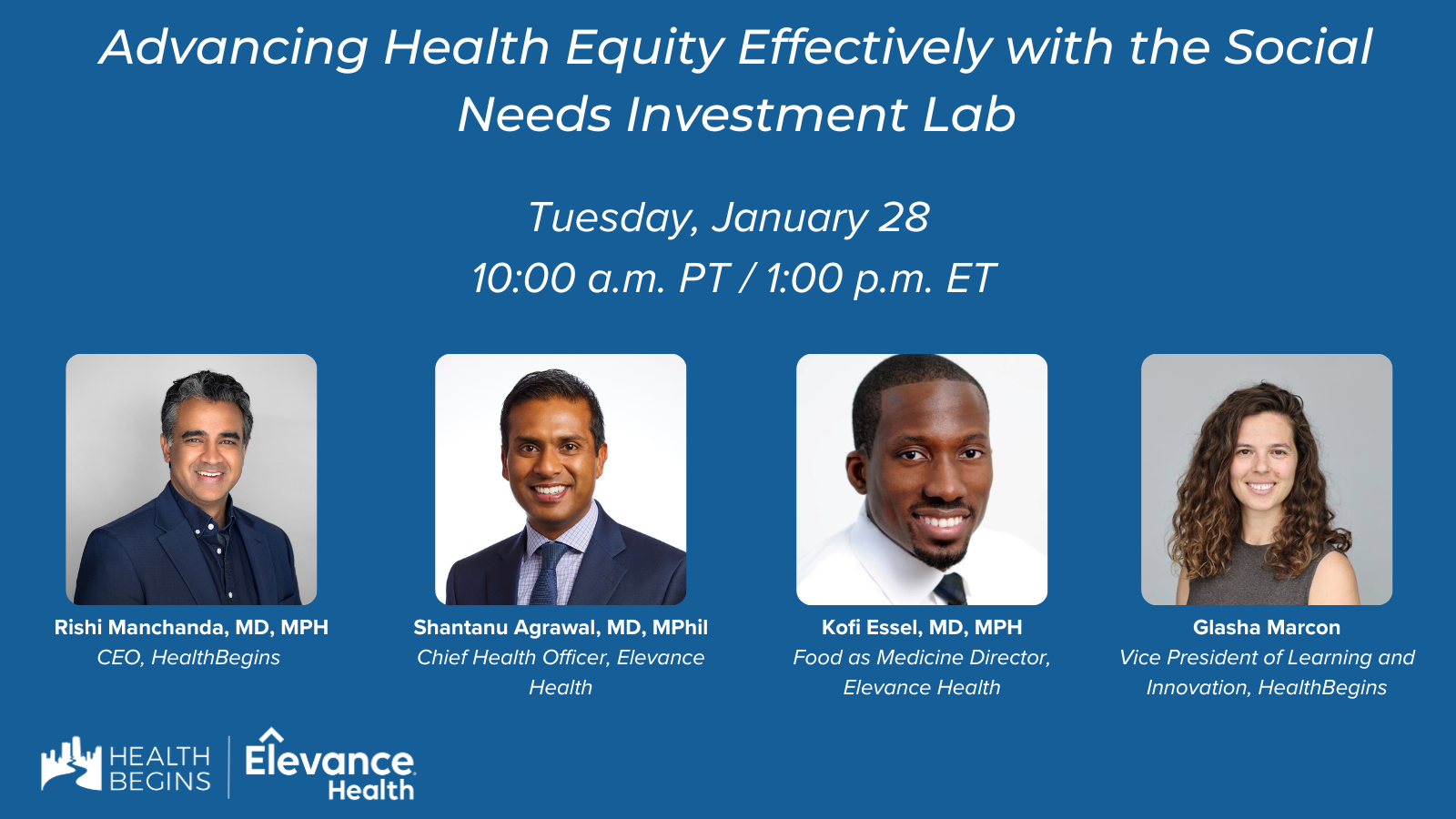
In this webinar, expert panelists will discuss and demonstrate The Lab’s Evidence Assessment Library tool, with a particular focus on interventions to improve food security and maternal health. Attendees will learn about the array of use cases for this tool and hear directly from social-needs partners about how they have used the Evidence Assessments to make the case for this critical work. Through this webinar, attendees will become better equipped to invest in solutions that improve population health outcomes and catalyze change.
Speakers:
- Rishi Manchanda, MD, MPH, CEO, HealthBegins
- Shantanu Agrawal, MD, MPhil, Chief Health Officer, Elevance Health
- Kofi Essel, MD, MPH, Food as Medicine Director, Elevance Health
- Glasha Marcon, Vice President of Learning and Innovation, HealthBegins
Webinar Objectives:
By the end of the webinar, attendees will be able to:
-
Identify benefits and use cases for Social Needs Investment Lab tools.
-
Understand how to use Evidence Assessments to assess and increase social needs investment.
-
Describe actionable insights and evidence on effective interventions to improve food security and maternal health.
Featured Content

Why DEI Matters for Health Equity—And How to Protect It
Diversity, Equity, and Inclusion (DEI) is a critical element of health equity, but around the country we continue to see coordinated efforts to dismantle DEI in all settings. In this post, Natashia Townsend recounts how she helped preserve DEI initiatives in her home state of Arizona and what...

How to Read the New Federal Dietary Guidelines as a Health Equity Advocate
The new Dietary Guidelines released by the Department of Health and Human Services not only run counter to established health standards, but also against health equity goals. Here are the the issues with these guidelines and what actions health equity advocates can take for better outcomes.

Small Practices Improve Health and Health Equity in Big Ways
The EQuIP-LA effort led to statistically significant health improvements and highlighted lessons that could help amplify the impact of small practices in advancing equity in more places.
