



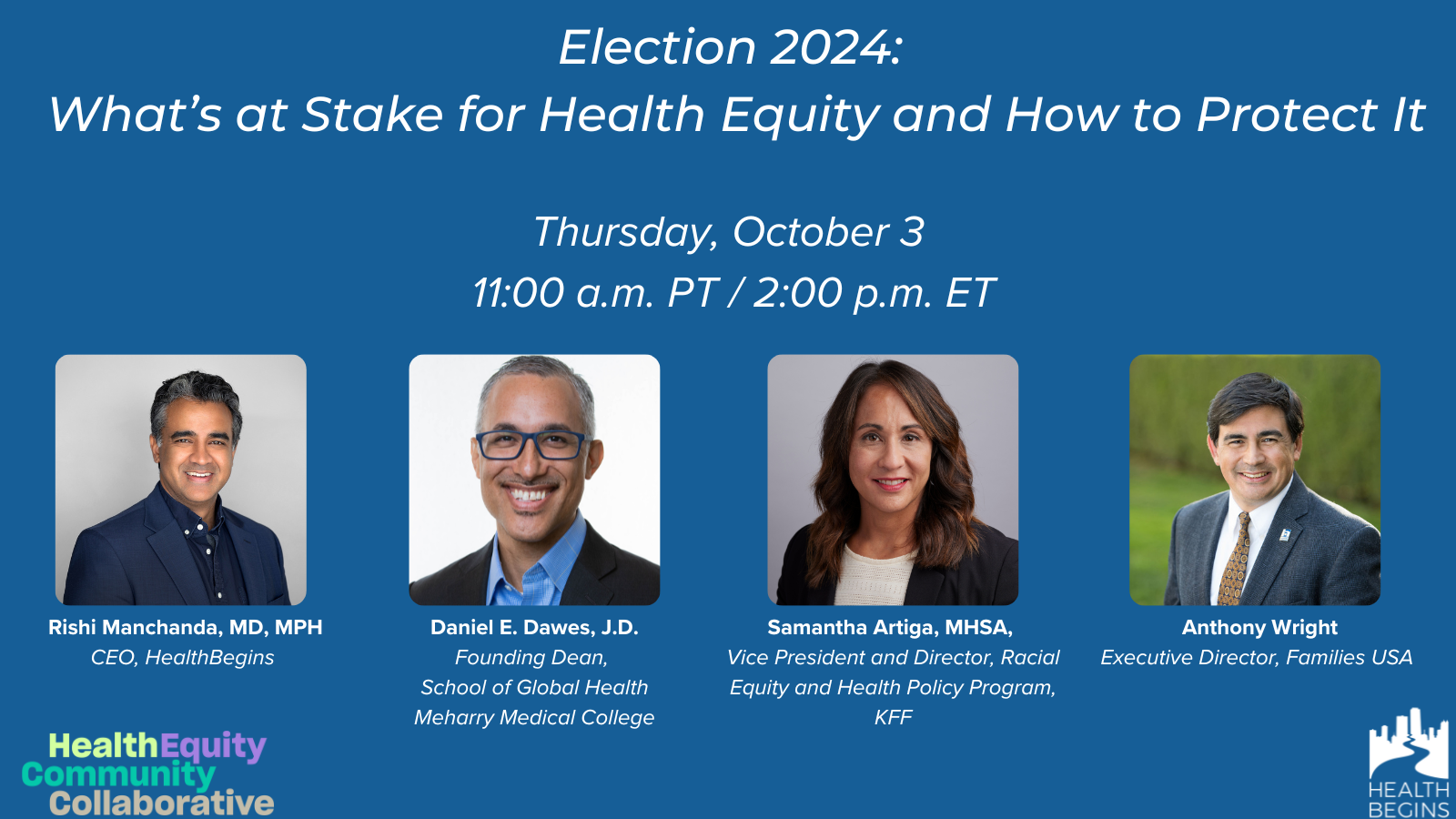
The noise of the 2024 election may seem deafening, but there are critical signals within it—especially for health equity. From the Oval Office to state legislatures to federal agencies and courtrooms, this election stands to powerfully affect our progress toward health equity and justice. And that means that we have an opportunity, and an urgent need, to define what’s at stake for health equity and pursue it.
The truth is that health equity travels not only through health care, but through courts, laws, public budgets and policies, and even obscure administrative departments. In this webinar, expert panelists explained the implications of recent threats to health equity (including Supreme Court decisions and new state laws) and illuminated how the upcoming election could affect them. They also outlined ways to get involved in collective efforts to help navigate and respond to these stakes.
Together, we articulated a set of key election priorities for health equity, across housing, food, access to justice, and other realms. And we helped to equip you, as health equity leaders, to mobilize to support these priorities in your institution and your community.
Speakers:
- Rishi Manchanda, MD, MPH, CEO, HealthBegins (host)
- Daniel E. Dawes, J.D., Founding Dean, School of Global Health, Meharry Medical College
- Samantha Artiga, MHSA, Vice President and Director, Racial Equity and Health Policy Program, KFF
- Anthony Wright, Executive Director, Families USA
Webinar Objectives:
By the end of the webinar, attendees will be able to:
-
Explain health care policy differences between presidential candidates’ platforms and discuss implications for health equity.
-
Describe at least three emerging health equity challenges at the state and local level and explore how the election might impact these challenges.
- Identify concrete and collective opportunities to get involved in your institution and community.
Featured Content

Why DEI Matters for Health Equity—And How to Protect It
Diversity, Equity, and Inclusion (DEI) is a critical element of health equity, but around the country we continue to see coordinated efforts to dismantle DEI in all settings. In this post, Natashia Townsend recounts how she helped preserve DEI initiatives in her home state of Arizona and what...

How to Read the New Federal Dietary Guidelines as a Health Equity Advocate
The new Dietary Guidelines released by the Department of Health and Human Services not only run counter to established health standards, but also against health equity goals. Here are the the issues with these guidelines and what actions health equity advocates can take for better outcomes.

Small Practices Improve Health and Health Equity in Big Ways
The EQuIP-LA effort led to statistically significant health improvements and highlighted lessons that could help amplify the impact of small practices in advancing equity in more places.
