



Fewer and fewer U.S. households can afford or access the food they need to be healthy. One emerging tool, Food Is Medicine (FIM), has broad bipartisan backing and strong potential to help address this problem. To fully realize its impact, however, it needs sustainable, scalable support.
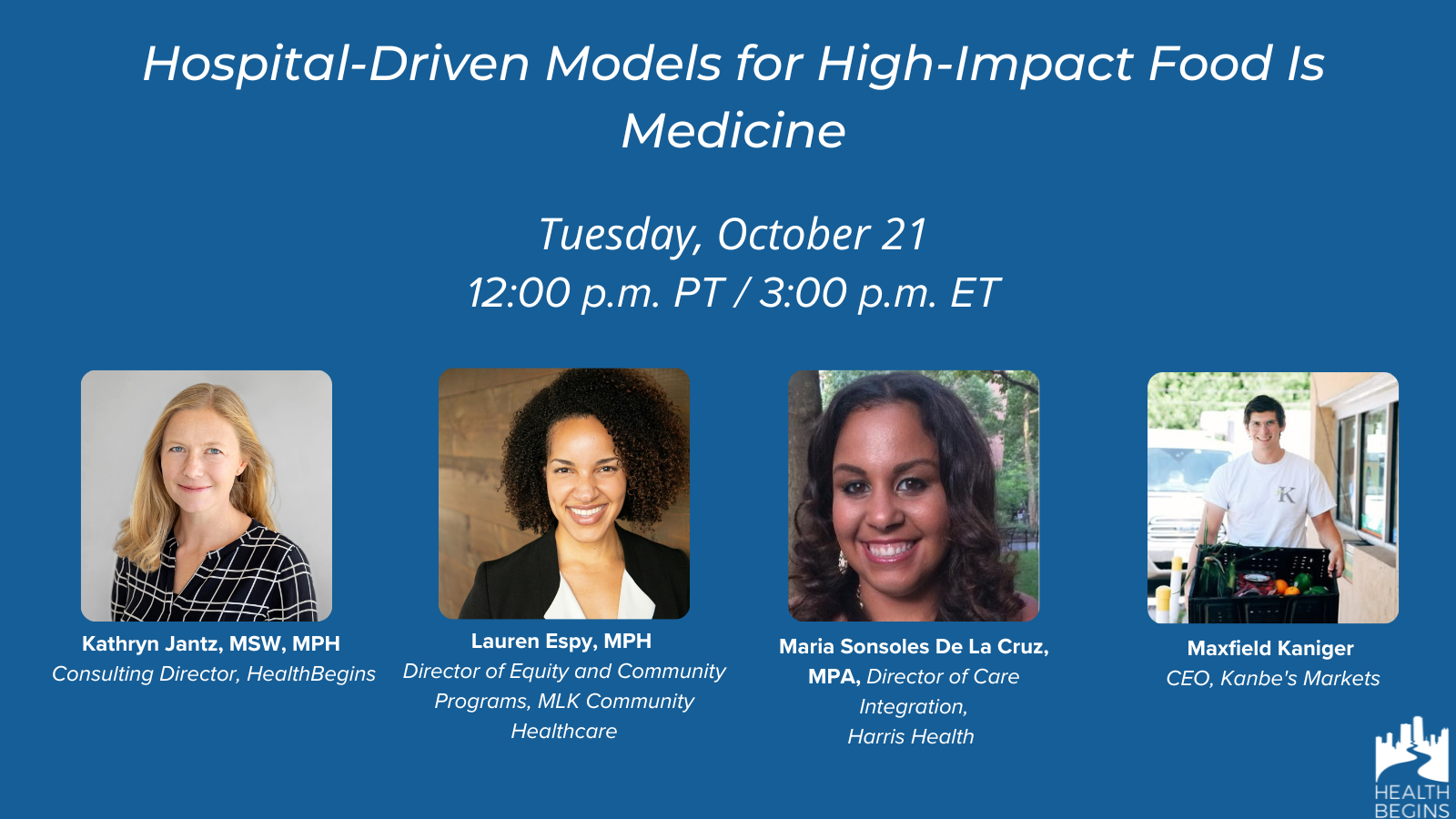
In this webinar, we highlight hospitals that are stepping into this gap and leveraging their influence and resources to support FIM implementation in their communities. These include public, private, and community-based hospitals forging deep community partnerships to accelerate some of the best emerging innovations in Food Is Medicine.
Hear hospital leaders explain innovative program design and financing models to effectively improve health by providing essential nutrition. Strategies include community food hubs, grocer partnerships, novel ways to deploy hospital cafeteria food services, and intentional use of community reinvestment and total-cost-of-care funding to move care upstream.
Speakers:
- Kathryn Jantz, MSW, MPH, Consulting Director, HealthBegins (host)
- Lauren Espy, MPH, Director of Equity and Community Programs, MLK Community Healthcare
- Maxfield Kaniger, CEO, Kanbe’s Markets
- Maria Sonsoles De La Cruz, MPA, Director of Care Integration, Harris Health
Webinar Objectives:
By the end of the webinar, attendees will be able to:
- Explain why it’s within hospitals’ capacity and interest to invest in Food Is Medicine.
- Identify existing finance mechanisms and policy structures that can support these investments.
- Understand how to leverage Food Is Medicine to address food insecurity to improve clinical outcomes.
Featured Content

Why DEI Matters for Health Equity—And How to Protect It
Diversity, Equity, and Inclusion (DEI) is a critical element of health equity, but around the country we continue to see coordinated efforts to dismantle DEI in all settings. In this post, Natashia Townsend recounts how she helped preserve DEI initiatives in her home state of Arizona and what...

How to Read the New Federal Dietary Guidelines as a Health Equity Advocate
The new Dietary Guidelines released by the Department of Health and Human Services not only run counter to established health standards, but also against health equity goals. Here are the the issues with these guidelines and what actions health equity advocates can take for better outcomes.

Small Practices Improve Health and Health Equity in Big Ways
The EQuIP-LA effort led to statistically significant health improvements and highlighted lessons that could help amplify the impact of small practices in advancing equity in more places.
