



In January 2023, CMS published new guidance to help states enhance and expand their efforts to address health-related social needs of Medicaid enrollees through a category of services known as “in lieu of a service or setting” (ILOSs). This guidance – along with other recent changes to waivers, regulations and requirements – adds nationwide momentum to efforts to integrate health and social care and reduce inequities for people covered by Medicaid. The guidance is also timely, as states, plans, and providers prepare for the anticipated ending of the federal COVID-19 public health emergency and with it, the potential loss of Medicaid coverage for millions of Americans and increase in unmet social needs.
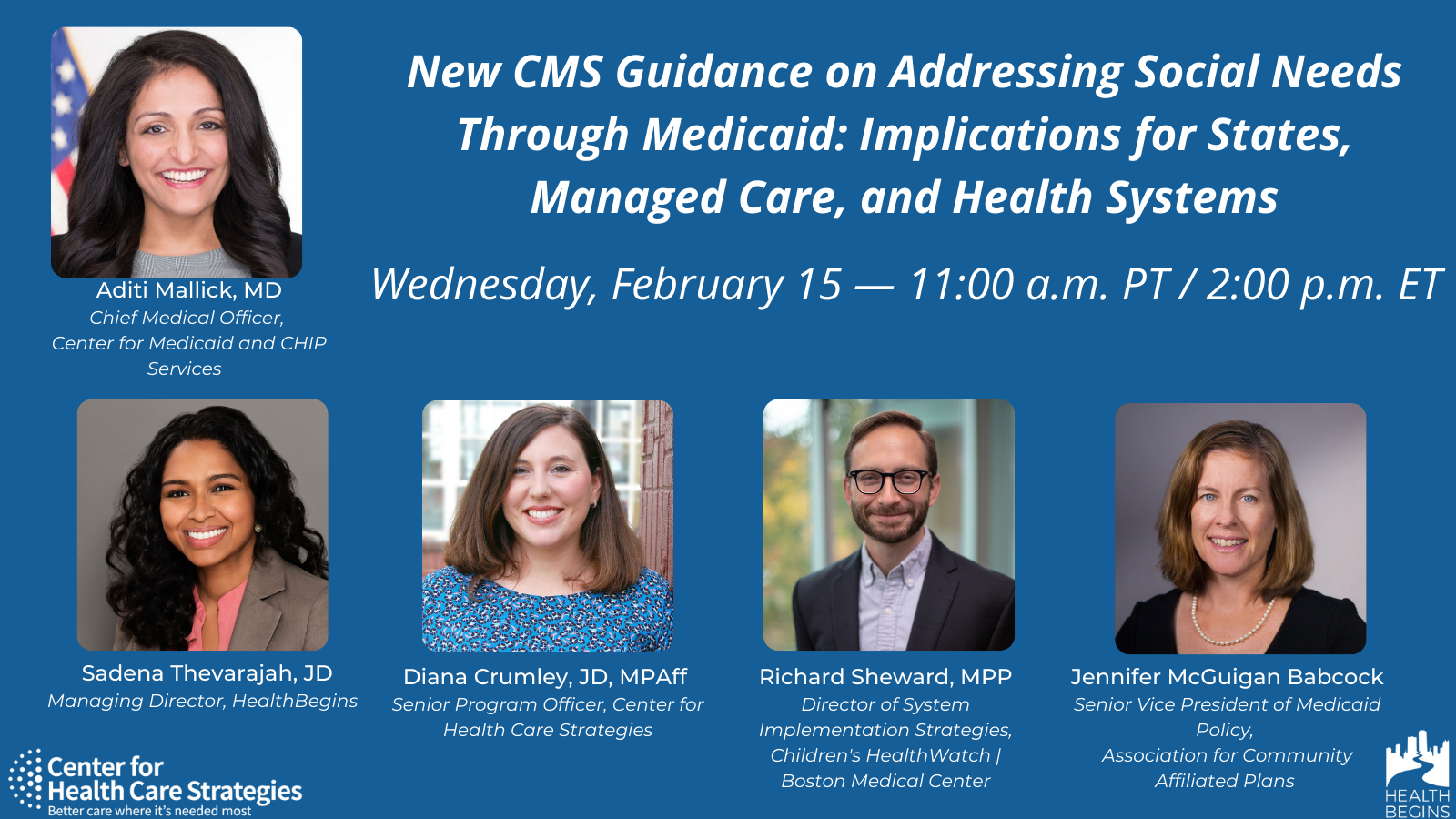
Watch this informational webinar and fireside chat hosted by HealthBegins and CHCS to learn more about the CMS guidance and what it means for state Medicaid agencies and Medicaid managed care plans who are working to advance health equity and meet the social needs of Medicaid enrollees. Expert panelists explained how to navigate challenges in using this new funding tool and maximize its potential to support equity.
Speakers:
- Sadena Thevarajah, JD, Managing Director, HealthBegins
- Aditi Mallick, MD, Chief Medical Officer, Center for Medicaid and CHIP Services
- Diana Crumley, JD, MPAff, Senior Program Officer, Center for Health Care Strategies
- Richard Sheward, MPP, Director of System Implementation Strategies, Children’s HealthWatch | Boston Medical Center
- Jennifer McGuigan Babcock, MPH, Senior Vice President of Medicaid Policy, Association for Community Affiliated Plans
Webinar Objectives:
By the end of the webinar, attendees will be able to:
-
Describe the latest CMS guidance on use of ILOS to help address the social needs of Medicaid enrollees.
-
List at least two concrete opportunities for states and Medicaid managed care plans to use this guidance to advance health equity and integrate health and social care.
- Describe at least 3 major challenges that states, Medicaid MCPs, and clinical and community-based providers may experience, as well as best practices and solutions to help navigate these challenges.
Featured Content

Why DEI Matters for Health Equity—And How to Protect It
Diversity, Equity, and Inclusion (DEI) is a critical element of health equity, but around the country we continue to see coordinated efforts to dismantle DEI in all settings. In this post, Natashia Townsend recounts how she helped preserve DEI initiatives in her home state of Arizona and what...

How to Read the New Federal Dietary Guidelines as a Health Equity Advocate
The new Dietary Guidelines released by the Department of Health and Human Services not only run counter to established health standards, but also against health equity goals. Here are the the issues with these guidelines and what actions health equity advocates can take for better outcomes.

Small Practices Improve Health and Health Equity in Big Ways
The EQuIP-LA effort led to statistically significant health improvements and highlighted lessons that could help amplify the impact of small practices in advancing equity in more places.
